
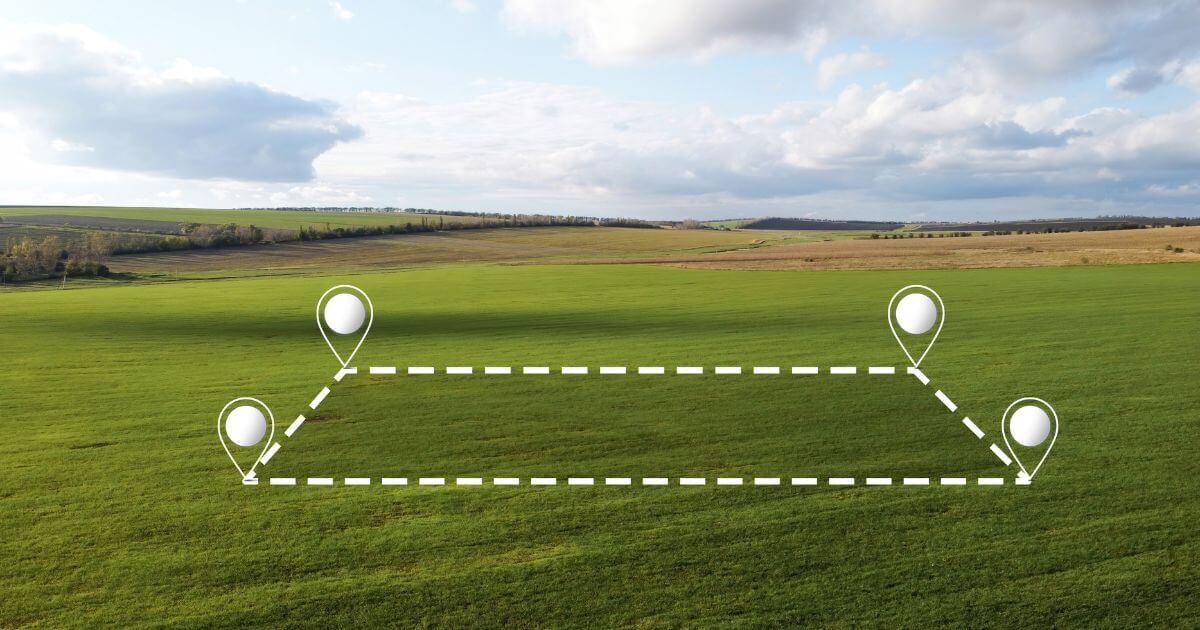
Vacant land is typically priced based on comparable sales, then adjusted for factors such as access, terrain, location, and market demand.
Most land investors start with market value, buy at a discount, and price close to market value when selling.
Why Pricing Vacant Land Is Different
Pricing vacant land is very different from pricing houses or income-producing properties.
Unlike residential real estate, land has no structure, no rental income, and often varies widely in usability from one parcel to another.
This makes land pricing less obvious and more dependent on market data and parcel specific factors.
The 3 Core Factors That Determine Land Value
1. Comparable Sales (Comps)
Comparable sales are the most important starting point when pricing vacant land.
You should look at:
- Recent land sales in the same area
- Similar lot sizes
- Similar parcel characteristics such as access, terrain, and zoning
Comps help define the real market value of a parcel.
2. Location and Accessibility
Location plays a major role in land value, even when the parcel itself looks attractive on paper.
Important factors include:
- Legal and physical road access
- Distance to towns or cities
- Proximity to amenities and infrastructure
Better access and a stronger location usually support a higher value.
3. Usability of the Land
Land that is easier to use is generally worth more.
Ask questions such as:
- Can the parcel be built on?
- Is the terrain flat or steep?
- Are there wetlands or flood risks?
The more usable the parcel, the stronger its market value tends to be.
How Investors Actually Price Vacant Land
Step 1: Find Market Value Using Comps
Start by identifying similar parcels that have sold recently.
Example: Similar parcels in the area sold for around $20,000
Step 2: Apply a Discount When Buying
Many land investors buy at a discount to create room for profit and resale.
A common buying strategy is to offer around 25% to 50% of market value, depending on the deal and the level of demand.
Example:
- Estimated market value: $20,000
- Possible offer range: $5,000 to $10,000
Step 3: Set a Resale Price
When selling, investors often price the parcel near market value or slightly below market value to encourage a faster sale.
Example: List price: $18,000 to $22,000
Adjustments That Change Land Pricing
Even two parcels in the same area can have very different values.
Factors That Can Increase Value
- Paved road access
- Flat terrain
- Close proximity to towns
- Utilities nearby
Factors That Can Decrease Value
- No legal access
- Flood zone exposure
- Wetlands
- Steep slope
- Very remote location
Common Pricing Mistakes
1. Ignoring Comparable Sales
Without comps, pricing is mostly guesswork.
2. Buying Based Only on a Low Price
A cheap parcel is not necessarily a profitable one.
3. Failing to Adjust for Access or Terrain
Two parcels with similar acreage can have very different values because of usability and access.
4. Overpricing When Selling
Overpricing often leads to a longer holding period and fewer interested buyers.
The Real Challenge: Pricing at Scale
Pricing one parcel manually is possible, but pricing many parcels becomes time-consuming.
- Each parcel needs comparable sales
- Each parcel has its own characteristics
- Manual analysis can take significant time
This is where many investors struggle to stay consistent and efficient.
A Smarter Way to Price Land
Instead of manually reviewing every parcel from scratch, many investors use tools to narrow down which parcels are worth deeper analysis.
With tools like Lands55, you can:
- Analyze multiple parcels in minutes
- Identify risk factors quickly
- Focus only on parcels with real potential
Final Thoughts
Pricing vacant land is not an exact science, but it does follow clear principles.
Start with comparable sales, adjust for the real characteristics of the parcel, and make sure there is enough margin in the deal.
The investors who succeed are not guessing. They follow a repeatable pricing process.